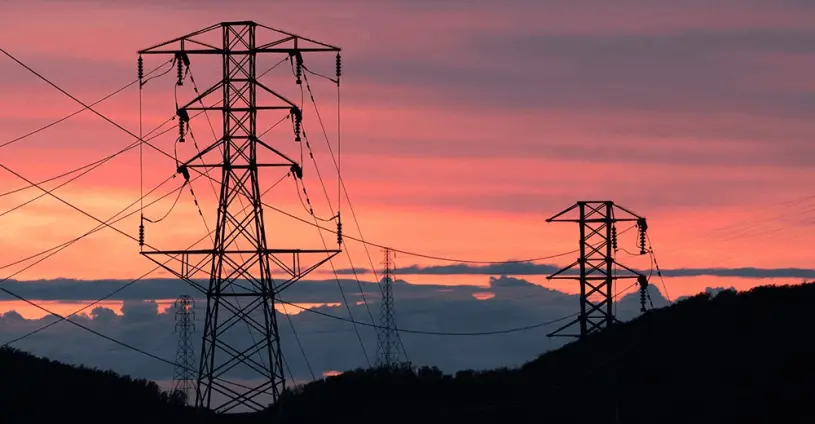
RENEWABLE VS GRID

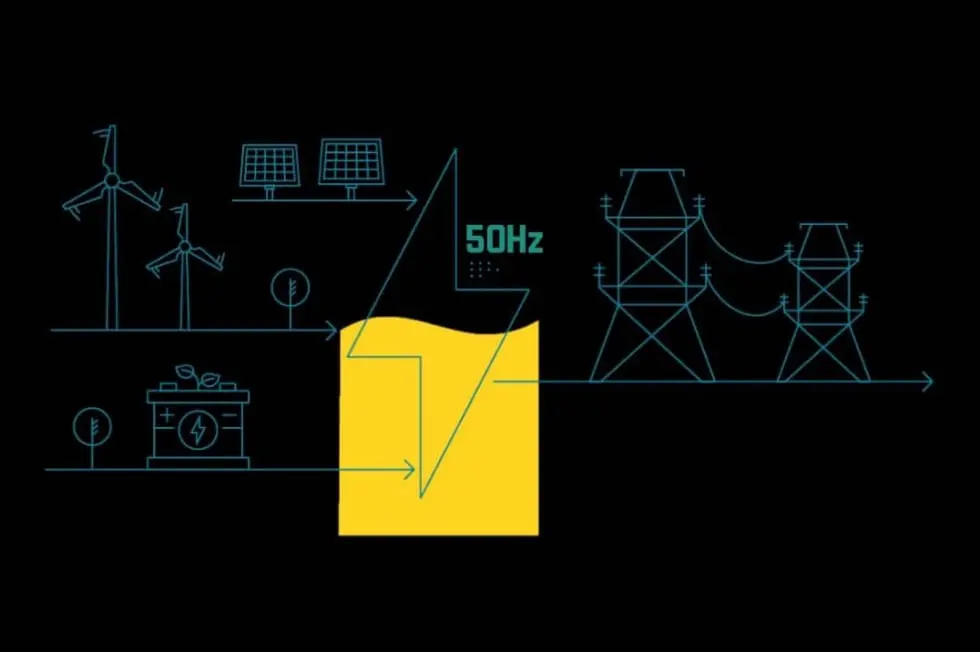
As we transition towards a cleaner future with more renewable energy sources like wind and solar, a critical challenge emerges: the loss of electrical inertia and spinning reserve 

Question becomes what is Electrical inertia and Spinning reserve but before answering that, How come when we plug an appliance into the mains socket, the power supply is always just right?

As they say, "standing on the shoulders of giants."

Isaac Newton's first law of motion states that an object at rest will stay at rest, and an object in motion will continue moving in a straight line unless an external force is applied to it.
You may inquire, how is a renowned physicist's examination of motion in the 17th century relevant to the contemporary challenge of maintaining stability in the electricity grid of the 21st century? 

Quick Break Down: 
"With a spirit of innovation, we navigate uncharted territories, exploring new ideas, technologies, and approaches."

Newton's revelation regarding the persistence of objects in their current state, if undisturbed, has proven to be immensely influential, extending its application to various other systems and behaviours over time

It's noteworthy that the term "inertia" originates from the Latin word "iners," which, among various meanings, includes lazy or dull

The concept of "inertia" is now commonly understood through Newton's first law, although its application has broadened over time from thermal, rotational etc

Now, when you think about it, when you plug in an appliance, you want the power supply to be lazy. It should be exactly what it always is. It needs to be consistently the same for your appliance to work.


Also we should note that an electricity network needs two things to function smoothly and reliably which are stable voltage and consistent frequency. However the voltage and frequency standards differ worldwide


Key Note.

System strength ensures the voltage stays steady, even when the grid experiences disruptions.
System inertia helps maintain a consistent frequency, preventing it from fluctuating excessively.
These two aspects are crucial for a secure and reliable electricity grid, regardless of how the power is generated.

Lets Dive deeper
When a big issue hits the power grid, system inertia steps in and acts like a buffer, holding the electricity's frequency steady until everything gets back in balance. This balancing act is typically done by adjusting how much power generators produce, either increasing or decreasing it as needed.

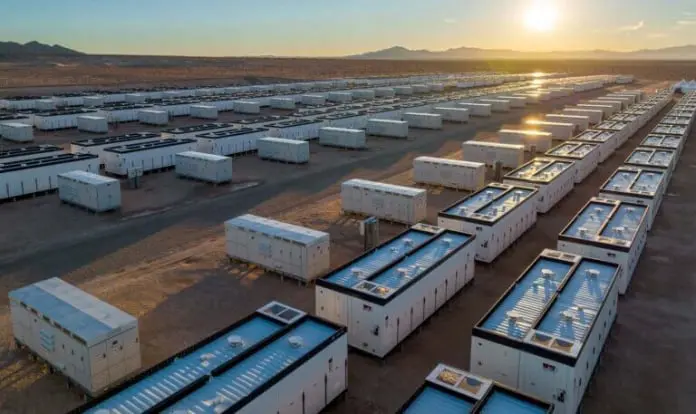
While both hydropower and rapid-response gas generators are fast-acting solutions for stabilising the grid during an outage, a high energy density and high power density energy storage system (referring to Intech Power backup solution) holds the advantage for several reasons:
  • Faster Response Time: Compared to generators that require physical adjustments and ramping up, Intech Power storage can react and deliver or absorb energy within milliseconds. This lightning-fast response is crucial during critical moments when grid frequency needs immediate correction
  • No Ramp-Up Time: Unlike generators, Intech Power storage doesn't require a "ramp-up" period to reach full capacity. They can deliver their full power output almost instantaneously, providing immediate support to the grid.
  • Flexibility and Scalability: Intech Power storage also can store large amounts of energy in a compact space, offering greater flexibility in deployment and scalability. This allows for the installation of smaller and more distributed systems closer to areas where demand fluctuations might be higher.
  • Overall Efficiency: Compared to combustion-based solutions like gas generators, Intech Power storage can deliver energy more efficiently with minimal energy losses during conversion. This translates to better overall system efficiency and reduced environmental impact.
What is the problem with renewables?

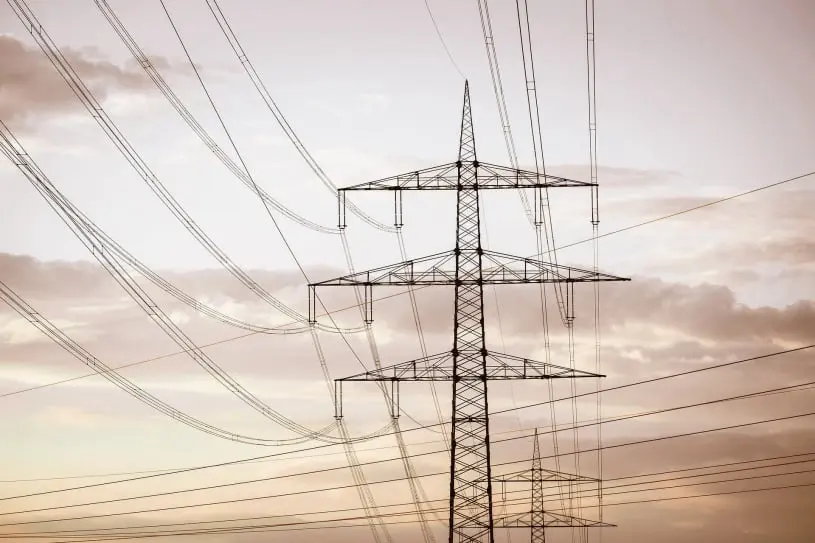
Frequency fluctuations: When demand for electricity suddenly changes, the grid's frequency (the rate at which power alternates) can rise or fall. Inertia, provided by the rotating mass of traditional generators, acts like a flywheel, resisting these changes and keeping the frequency stable.
What is the cause ?

Blackouts: If the frequency falls too far, entire sections of the grid can collapse, leading to blackouts. Spinning reserve refers to additional generation capacity that can be quickly brought online to meet unexpected surges in demand, preventing such collapses.
So, why are renewables losing these crucial elements? 

So, why are renewables losing these crucial elements?

1

Non-rotating generation:

Unlike traditional generators, solar panels and wind turbines don't have spinning parts, so they don't inherently provide inertia.
2

Variable output:

Renewables like solar and wind are inherently variable, meaning their output depends on weather conditions. This variability can further exacerbate frequency fluctuation

So, why are renewables losing these crucial elements?

  • Non-rotating generation: Unlike traditional generators, solar panels and wind turbines don't have spinning parts, so they don't inherently provide inertia
  • Variable output: Renewables like solar and wind are inherently variable, meaning their output depends on weather conditions. This variability can further exacerbate frequency fluctuation

The Solution:

Compensation Strategies:
We need new strategies to compensate for the loss of inertia and spinning reserve in renewable-heavy grids. Here are some promising solutions:
Energy storage: 

Batteries and other forms of energy storage can act as virtual flywheels, storing excess energy during periods of low demand and releasing it quickly when needed to maintain frequency stability.

Grid-connected technologies:

Devices like synchronous condensers and flywheel storage can mimic the inertia of traditional generators, providing valuable stability services

Smart grids and advanced controls:

Utilising intelligent grid technology and control systems can help predict and manage frequency fluctuations, allowing for faster and more precise adjustments to generation and demand

READ MORE ABOUT INTECH POWER SOLUTIONS TO SEE HOW WE ARE ON A MISSION TO SOLVE ENERGY POVERTY IN AFRICA

The Path Forward Transitioning to a renewable energy future requires careful consideration and solutions for the challenges posed by the loss of inertia and spinning reserve. By implementing a combination of the strategies mentioned above, we can ensure a stable and reliable grid while achieving our sustainability goals.

This is an ongoing area of research and development, with new technologies and approaches emerging all the time. By adapting and innovating, we can build a cleaner and more resilient grid for the future.


Brightening the Future: Harnessing Renewable Energy and Battery Storage to Combat Energy Poverty


© Copyright 2025 Intechpower- All Rights Reserved